

Formentera, 15 August 2026
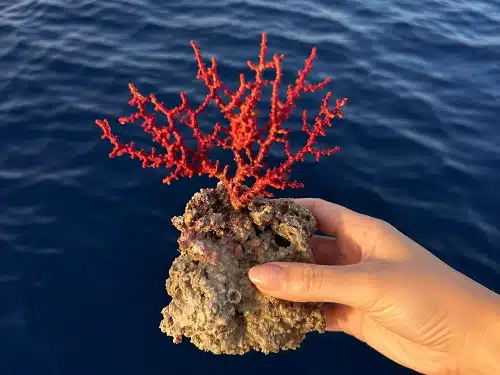
Formentera is developing a marine restoration project aimed at recovering corals and gorgonians accidentally caught in fishing nets. The initiative is applying a method previously tested in Catalonia to the waters around the island, with the aim of returning these organisms to the seabed under conditions that improve their chances of survival.
The CAVALGA project involves researcher Stefano Ambroso from the Institute of Marine Sciences (ICM-CSIC) and draws on the experience of LIFE ECOREST. Since 2022, this programme has enabled more than 8,000 corals, gorgonians and sponges to be reintroduced into the sea off the coasts of Barcelona and Girona.
The results obtained in Catalonia showed estimated survival rates of over 90% for some of the recovered organisms. Researchers also found that these structures once again played an important role in the ecosystem by providing shelter and breeding grounds for other species.
Formentera is now adapting this model to the characteristics of its seabed, which has a different diversity of corals from that found in Catalonia. The project combines the restoration of organisms affected by fishing with scientific research and direct collaboration with the fishing industry.


Experience in Catalonia
The experience that serves as a model for Formentera began with LIFE ECOREST along the Catalan coast. The project installed aquariums at eight fishermen’s guilds in Barcelona and Girona to receive corals, gorgonians and sponges accidentally caught in fishing nets.
Returning these organisms directly to the sea did not guarantee their survival. Many had been torn from their base and could end up lying on their side or covered by sediment. To prevent this, biologists reattached them to stones or pebbles before the fishermen returned them to the seabed.
Since 2022, this procedure has enabled more than 8,000 specimens to be reintroduced, with some achieving estimated survival rates of over 90%.


The ‘badminton method’
The technique used is known as the “badminton method”. Once the coral or gorgonian has been attached to a stone, it is gently dropped from the boat. The weight of the stone helps it reach the seabed in an upright position, in a similar way to how a badminton shuttlecock falls.
This orientation reduces the risk of the organism becoming buried by sediment and allows it to continue receiving the currents it needs to feed. The method therefore aims to increase its chances of survival and restore the three-dimensional structures that these organisms form on the seabed.
Creating shelters and breeding grounds
The aim of restoration is not simply to save specimens that have been accidentally caught. Corals, gorgonians and sponges form structures that provide shelter and breeding grounds for fish, crustaceans, cephalopods and other species.
In Catalonia, researchers reintroduced the specimens into areas that the fishing industry itself had previously closed to fishing, some covering as much as 50 square kilometres. Subsequent monitoring detected egg clutches and juvenile specimens, confirming that these structures served as nursery grounds for some species, particularly cephalopods.
Commercially important species were also found around the restored organisms, demonstrating how the restoration of these habitats could also benefit the fishing industry.
Collaboration with fishermen
Fishermen play a key role in this system. They are the ones who retrieve the organisms from their nets, keep them in water and take them to the aquariums, where they can be prepared before being returned to the sea.
The Catalan experience showed that making this process as easy as possible was essential to achieving greater participation. Locating the aquariums close to easily accessible areas, for example, increased crew involvement.
LIFE ECOREST also studied specimens recovered by trawlers. During the warmer months, some had difficulty surviving, possibly due to the thermal shock between deep waters, where temperatures range from 15 to 17°C, and surface waters, where temperatures exceed 20°C. With the arrival of autumn, researchers observed higher survival rates.
I’m Ramón Tur, the person behind everything written and photographed on this website about Formentera. I discovered the island in 1972 when my parents, aboard the mythical Joven Dolores, took me on vacation from Ibiza for the first time, and it was love at first sight that has only grown stronger over time, making Formentera my place of residence for many years now. If you wish, you can follow me on Instagram @4mentera.com_
If you're planning to visit Formentera, make sure to check out our discount codes section first.


