

Formentera, September 6, 2025
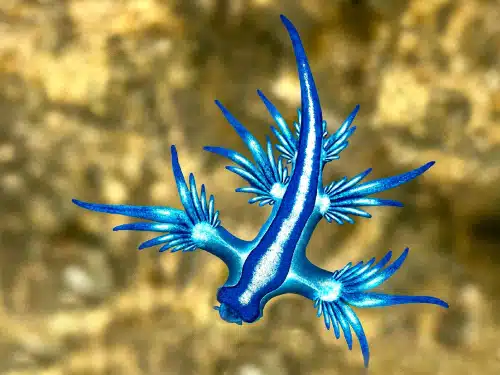
Last Thursday afternoon, the presence of two specimens of the Blue Dragon (Glaucus atlanticus) was confirmed on Migjorn beach, Formentera. The discovery was made by a woman who was enjoying a swim; after capturing them, she informed the Formentera Divers dive center, which in turn notified Marco Lage, the coordinator of the island’s Lifeguard Service, who made the news public.
The Blue Dragon, just a few centimeters long, stands out due to its striking appearance and vivid colors. While its sting can be painful, specialists indicate it poses no serious risk to most swimmers.
The appearance of this species in the waters of Formentera is part of a broader phenomenon linked to the warming of the Mediterranean. Since it is a mollusk typically found in warm oceans, its arrival on these shores is seen by biologists as a direct consequence of rising sea temperatures.
Despite the concern it may cause, experts insist that the Blue Dragon does not represent a major threat. Its presence serves as a reminder of the importance of environmental education and of citizen collaboration in preserving the marine environment.


A Fascinating Predator
Glaucus atlanticus is a marine nudibranch that, far from being excessively dangerous, plays an important role in the ecosystem. This mollusk feeds on jellyfish and, at times, Portuguese man o’ war, storing the stinging cells from its prey in its appendages. Through this mechanism, it can defend itself while also helping control organisms feared by beachgoers.
Biologists clarify that, in the Mediterranean, its stinging potential is reduced compared to that in its native habitats, as the prey it feeds on here are not as venomous as those in other seas. That’s why any Blue Dragons spotted on Formentera’s beaches are no more dangerous than a common jellyfish.


What to Do in Case of a Sting
Recommendations for treating contact with a Blue Dragon are similar to those for jellyfish stings. It’s advised to wash the affected area only with salt water, avoid using fresh water, alcohol, or vinegar, and apply a cold cloth to the skin—never direct ice.
If symptoms worsen, it’s best to visit a medical center or alert the lifeguard services. In most cases, the discomfort is temporary and doesn’t lead to complications.
An Unexpected Visitor in Formentera
The first documented sighting of the Blue Dragon in the western Mediterranean dates back to 1705 in Ibiza. After that, there were no further records of its presence in the region until quite recently.
The reappearance of this marine creature along our coasts highlights how climate change is facilitating the arrival of uncommon species to the Mediterranean. Experts stress that this phenomenon should be monitored carefully, but without alarmism.
The Blue Dragon does not prevent people from enjoying the sea in Formentera, though it does call for swimmers to be a bit more cautious—given their small size, they are harder to spot than jellyfish. The recommendation if one is seen is clear: do not touch it and call the emergency number 112.

I’m Ramón Tur, the person behind everything written and photographed on this website about Formentera. I discovered the island in 1972 when my parents, aboard the mythical Joven Dolores, took me on vacation from Ibiza for the first time, and it was love at first sight that has only grown stronger over time, making Formentera my place of residence for many years now. If you wish, you can follow me on Instagram @4mentera.com_
If you're planning to visit Formentera, make sure to check out our discount codes section first.


