
Planting Posidonia in Formentera


Formentera, 12 March, 2025
In 1981, Manu San Félix’s life took a decisive turn. The young Madrid-born ocean enthusiast had the opportunity to go on his first dive in the Mediterranean, a moment that would shape his destiny. Beneath the surface, he discovered Posidonia oceanica, a unique marine plant that fascinated him. His amazement was so profound that, years later, he decided to move to Formentera and dedicate his life to studying and protecting this essential ecosystem.
Since then, he has not only become a renowned marine biologist and National Geographic explorer but also one of the leading advocates for marine conservation in the Mediterranean.
Posidonia oceanica is not seaweed but a higher plant with roots, stems, leaves, and the ability to flower underwater. Its vast underwater meadows in Formentera play a crucial role in maintaining the sea’s ecological balance.
They are capable of releasing large amounts of oxygen, contributing to water transparency and serving as a refuge for hundreds of marine species. Moreover, a single square meter of Posidonia captures as much carbon dioxide as 15 square meters of the Amazon rainforest, making it one of the most efficient ecosystems in the fight against climate change.
Faced with this crisis, Manu San Félix, together with the non-profit organization Vellmarí, has launched an innovative manual replanting initiative for Posidonia in Formentera, with the goal of restoring damaged meadows. This pioneering project seeks to demonstrate that, with the right effort and environmental awareness, it is possible to reverse part of the damage and recover one of the planet’s most valuable ecosystems.
For over three decades, San Félix has studied the possibility of replanting Posidonia to restore degraded seagrass meadows. In the early years, the objective was simple: to determine whether the seedlings could survive. Today, thanks to years of research, he knows they can. Lab-germinated plants can take root and grow, opening a door of hope for the Mediterranean’s recovery.


In recent years, his team has perfected the planting method, achieving a 75% survival rate. In 2024, they replanted more than 15,000 plants, far exceeding their initial goal of 10,000 and successfully covering 600 square meters of seabed. For 2025, the goal is even more ambitious: to surpass 50,000 replanted plants.
San Félix describes Posidonia reforestation as an underwater gardening process. This is because Posidonia is a terrestrial plant that evolved to adapt to the marine environment, and for this reason, the method used by the Vellmarí Association is based on two strategies very similar to those applied in terrestrial agriculture:
This latter technique has increased the efficiency and speed of the replanting process, thanks to experience gained over the years.
If you're planning to visit Formentera, make sure to check out our discount codes section first.
The sea is not an easy environment for reforestation. While germinating Posidonia in a laboratory is a fundamental step, anchoring it to the seabed is the real challenge. “Plants don’t die just because; the problem is that the sea rips them out. The energy of the Mediterranean is immense, and our fight is to help these seedlings resist,” explains San Félix.
Planting Posidonia remains a challenge, but the greatest difficulty is helping the plant anchor firmly to the seabed to withstand storms and waves. Unlike trees on land, the main risk is not that the plant will die but that it will be uprooted by the force of the sea.
The success of Posidonia reforestation would not be possible without the effort of volunteers. Last summer, 300 people participated in the planting, and the goal for 2025 is to reach 500 volunteers.
Beyond its ecological impact, reforestation also raises awareness. “Volunteers who go underwater come out transformed. When you plant your own Posidonia, you understand how easy it is to destroy and how difficult it is to recover,” reflects San Félix.
Additionally, reforestation work requires not only physical effort but also institutional support and funding. “It’s not just about planting,” says San Félix. “You need to secure the support of foundations and companies like Trasmapi and its Be Blue Foundation, among others, and have a solid project to obtain reforestation permits at the institutional level.”


Although awareness of Posidonia’s importance has grown in recent years, there is still much to be done. “When I arrived in Formentera in 1992, Posidonia didn’t exist in the public imagination. Its enormous contribution to the islands’ economy and ecology was not recognized,” says San Félix.
However, the fight continues. “Many times, I feel powerless because we keep losing Posidonia, and the Mediterranean continues to deteriorate,” admits the biologist. “But planting the sea is planting hope. And although the waves are strong, there is something more powerful than the force of the water: the will of those who refuse to give up.”
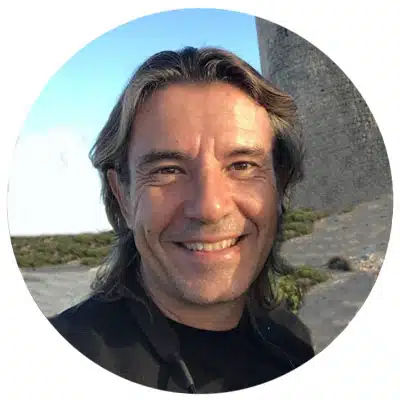
I’m Ramón Tur, the person behind everything written and photographed on this website about Formentera. I discovered the island in 1972 when my parents, aboard the mythical Joven Dolores, took me on vacation from Ibiza for the first time, and it was love at first sight that has only grown stronger over time, making Formentera my place of residence for many years now. If you wish, you can follow me on Instagram @4mentera.com_
If you're planning to visit Formentera, make sure to check out our discount codes section first.

Todos los derechos reservados Pitiusas Market, S.L.U.


